
Graves County Arrest Report Windows
The Graves County sheriff and jail publish no weekly or multi-day blotter. Unofficial sites step into that gap. RecentlyBooked keeps a rolling 30-day page for the county, while Mugshots Zone archives entries by month. Kentucky Arrests.org offers date-specific county pages. Busted Newspaper holds a larger historical collection. Keep the windows separate, because their totals, update practices, and source labels rarely match.
A multi-day vendor list still cannot capture every arrest made in Graves County. Entries may include transfers, duplicates, or sparse charge data. A date page shows what that publisher displayed that day, not whether a person stayed in a Graves facility. Roll-off changes nothing official. The booking record and the court file remain untouched when an item vanishes from a vendor site.
Read Graves County Arrest Reports
Start with the date and the agency. A booking photo or a headline alone will not separate a publisher's archive from local custody and the later court case.
- Choose a source by window. Use a rolling page for the recent month, a date page for one day, or a monthly archive for broader browsing.
- Match the full name, booking date, booking ID when present, and arresting agency. Do not rely on physical descriptors alone.
- Check whether the listed place is an arrest location, a home city, or the booking facility. Those labels are not interchangeable.
- Contact the Graves County Jail or Restricted Custody Center to ask about current local custody.
- Request the official booking record from the jail or sheriff when the vendor entry is incomplete or no longer visible.
- Use the Circuit Clerk or Kentucky Judicial Indexes for the case and disposition, which can differ from intake charges.
For a same-day question, take the Graves County Arrested Today page. It focuses on fresh entries and direct custody checks. The multi-day approach here works backward across published dates before moving on to official archives.
Fields in Graves County Arrest Reports
County-local pages expose only part of a booking record. Field names vary from site to site. A blank charge field is just missing data, not a legal result, and the exact intake time or court date seldom appears on multi-day sources.
| Entry field | How to read it |
|---|---|
| Name and aliases | Identity leads that require comparison with dates, agency, and an official record. |
| Booking ID | A jail intake identifier, not a DOC number or court case number. |
| Booking date | The recorded intake date, which may differ from arrest or publication. |
| Agency | The department attributed with the arrest or intake. |
| Reported charge | An charge at booking that can be amended, dismissed, or resolved later. |
| Bond | A field that may be absent or incomplete; a displayed zero is not a release forecast. |
| Photo | An identification image copied by a publisher, not proof of guilt or current custody. |
| Status or location | A point-in-time label that may lag release, transfer, or another hold. |
Use neutral terms: reported charge, booking date. Final status rests with the court or the custody agency. A vendor card or news story can linger online long after a release or case result.
Graves County Date-Page Evidence
The unofficial Kentucky Arrests.org date page shows a dated layout, a displayed record count, and only a few fields.
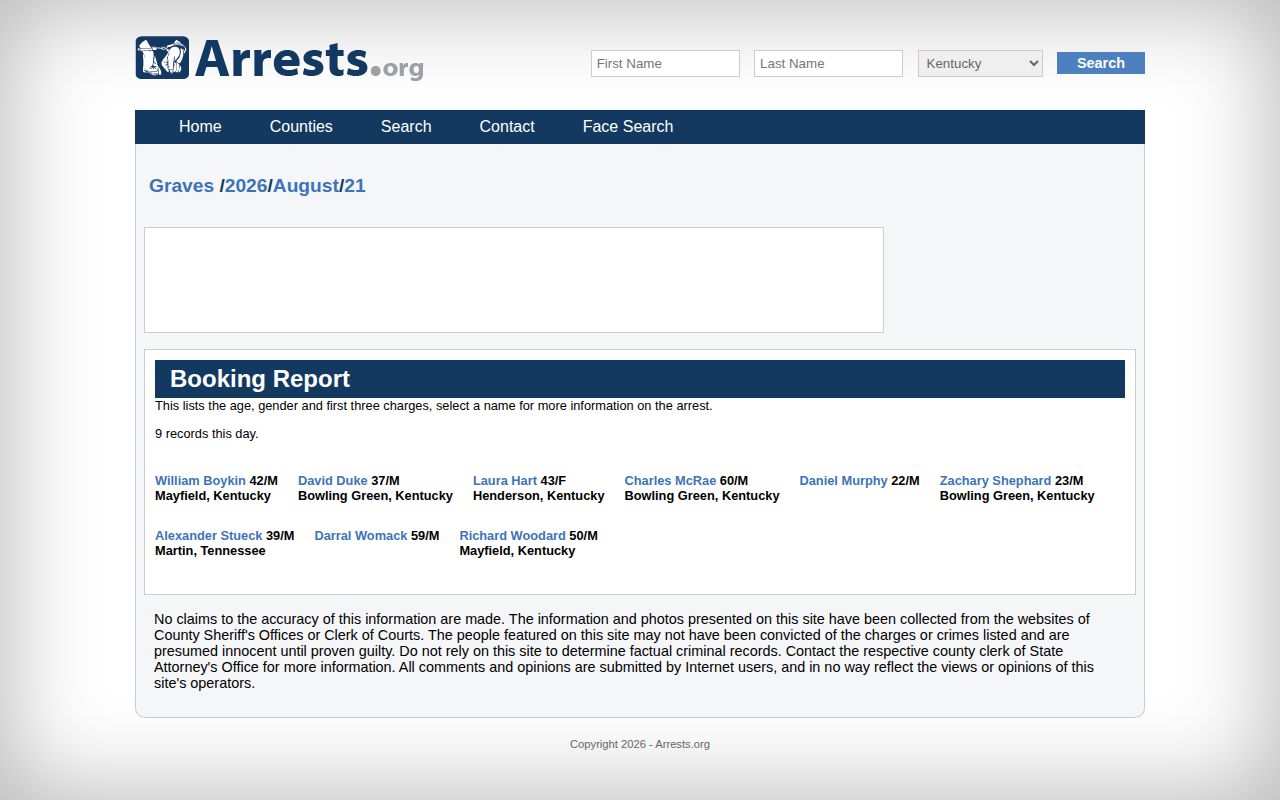
This is one publisher's page on one date. It is not a blotter. It offers no live jail status for Graves County. The West Kentucky Star Local and Regional section shows the separate news channel, which covers selected Graves County incidents in story form.
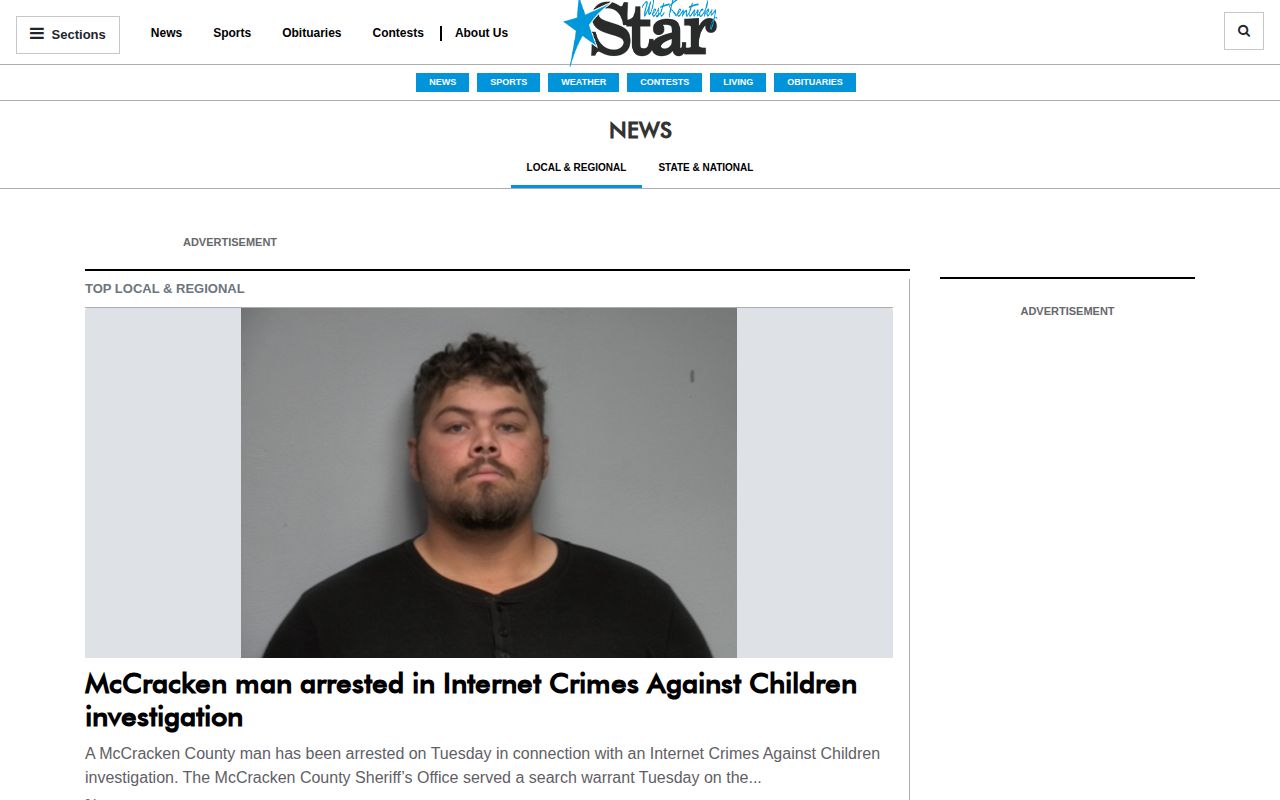
One dated news story is not a full arrest log.
News Is Not a Graves Blotter
Not every Graves County arrest becomes news. The Mayfield Messenger, West Kentucky Star, and KFVS12 choose which arrests to cover. The Messenger runs twice weekly. The regional sites post story-driven updates. Their reports often name Mayfield Police, the Graves County Sheriff's Department, or another agency. A story may carry an agency photo, a scene image, or nothing at all. The added context helps. Routine bookings still get skipped, and a story can run days after the arrest. Sheriff social posts feed this chain. They never become a searchable official log. Publication date, arrest date, and booking date are three separate facts.
Note: News coverage selects incidents for public interest and cannot measure the full volume or pattern of Graves County bookings.
Archive Graves County Arrest Records
Old booking material has an official home. The Kentucky county jailer retention schedule governs it. A Jail Register or Inmate Register Book can list name, commitment date, authority, reported offense, discharge, and remarks. The Inmate Record File goes further. It can hold court papers, property items, custody notes, calls, and photographs, all under a five-year-after-release schedule with statutory restrictions and no promise a Graves County item survives intact.
Start with the Graves jail records process. That office handles booking files and images. The sheriff's records custodian is the other route when that department created the record. State the full name, approximate booking date, arresting agency, any booking ID, and the exact item sought. Ask where the record sits. The first office may not hold it.
Court records follow a different trail. Storm damage hit the Graves Circuit and District Clerk office and its storage. A Kentucky Supreme Court order describes recovered records being scanned, with images stored through the Kentucky Department for Libraries and Archives. Older research may require the clerk, a court records facility, or KDLA rather than a vendor archive.
Past the Graves Arrest Window
Kentucky Judicial Indexes can surface criminal case material. But criminal indexing usually keys on the indictment date instead of the arrest date. A search built around a booking date may miss the case entirely. CourtNet is a snapshot too. It is not a live feed of what a judge signed today. Do you have a case number? Bring it with you. Ask the Graves Circuit Clerk where the official file or image actually sits.
KDLA takes criminal case-file requests. It posts an estimated response time of four to six weeks. Its State Archives holdings run deepest for older government records. Anything after 1978 may bounce back to the Circuit Clerk or to a records-center process. That archive path deals with government records. It cannot tell you whether some commercial arrest page got its facts straight.
A record can disappear from a publisher while the agency still holds it. The reverse happens too. A stale search result can linger long after a source changes. Retention rules, access limits, sealing, and expungement all shape official records. A vendor's page cannot resolve any of them. Ask for the source, the record series, the date, and any restriction. A vague request for an arrest history will get you nowhere.
Graves Arrest Reports and Disposition
An arrest report is a snapshot of one event. It documents a booking, nothing more. A person may be released, transferred, or moved into Kentucky Department of Corrections custody. Each of those is just a custody change. Charges get reduced, merged, or dropped as a case moves.
Keep the three records in their proper lanes. The Graves County jail answers local custody questions. The booking custodian holds the intake record. The court alone can tell you how the case ended. A state offender entry fits a later state-custody or supervision question. Treat each source in its own role. A multi-day blotter then stops pretending to be a courtroom summary.
When two reports disagree, write down each source's displayed date, agency, identifier, and exact wording. Then ask the right official office to confirm the underlying item. Two similar cards may describe one arrest or two. Transfers, repeated bookings, and copied data all create close matches. Do you have a court case number? That number is a far better route to the final disposition than a publisher's headline. This source-by-source method takes longer than trusting one archive. It also protects you. It keeps a Graves County arrest lead from standing in for a full legal history.